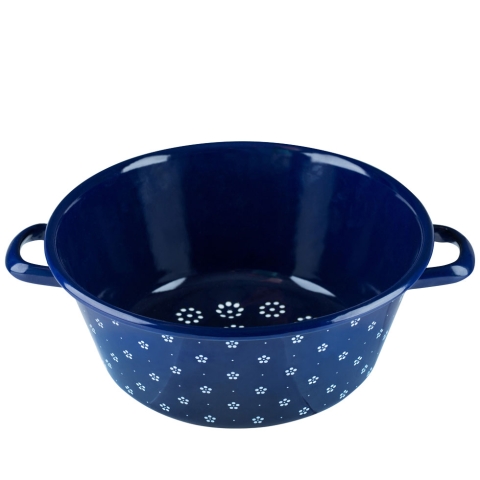
Vegetable colander Ø 26cm
- Inner diameter: 25.9cm
- Depth: 11.4cm
- Article number: 0328-073
- EAN: 9003064730686
- In stock - More than 10 pieces available
- Delivery within 6 daysexcluding weekends and public holidays in Austria View shipping costs
Porcelain enamel truly stands out
Ten good reasons to choose RIESS Premium Enamel:
- Handmade in Austria using renewable electricity
- Suitable for induction and all other types of stoves
- Cut- and scratch-resistant
- Easy to clean and bacteria-inhibiting
- Healthier and more energy-efficient cooking
- Flavour-netural
- Heat-resistant enamel surface up to 450°C
– recommended operating temperature: 220°C - Durable with proper use and care
- Available in many colours and designs
- Recyclable as scrap metal
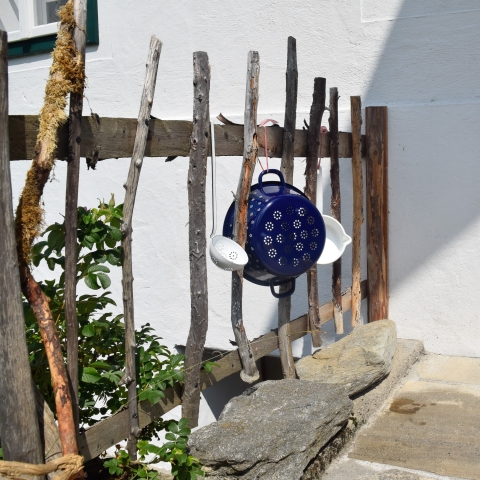
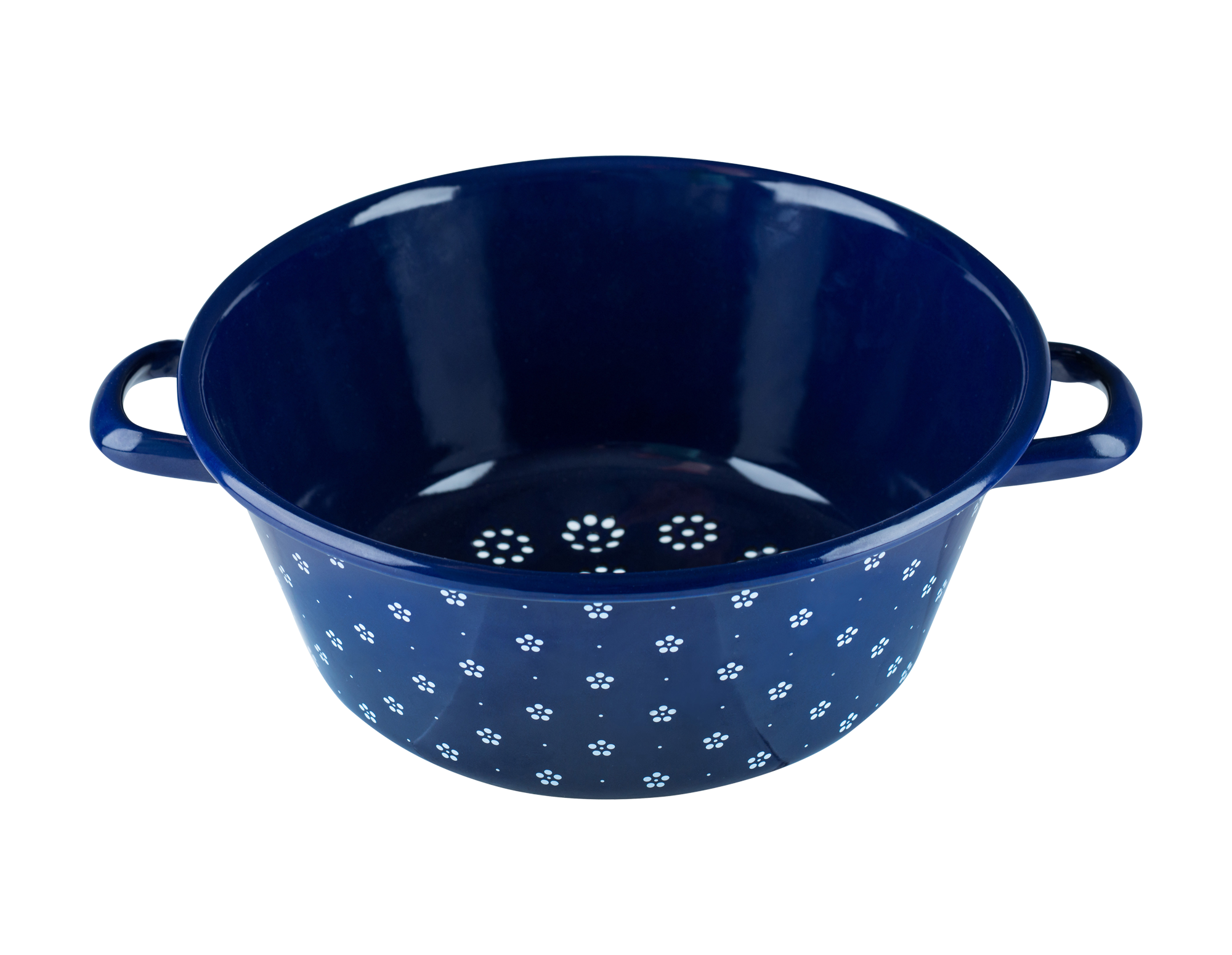
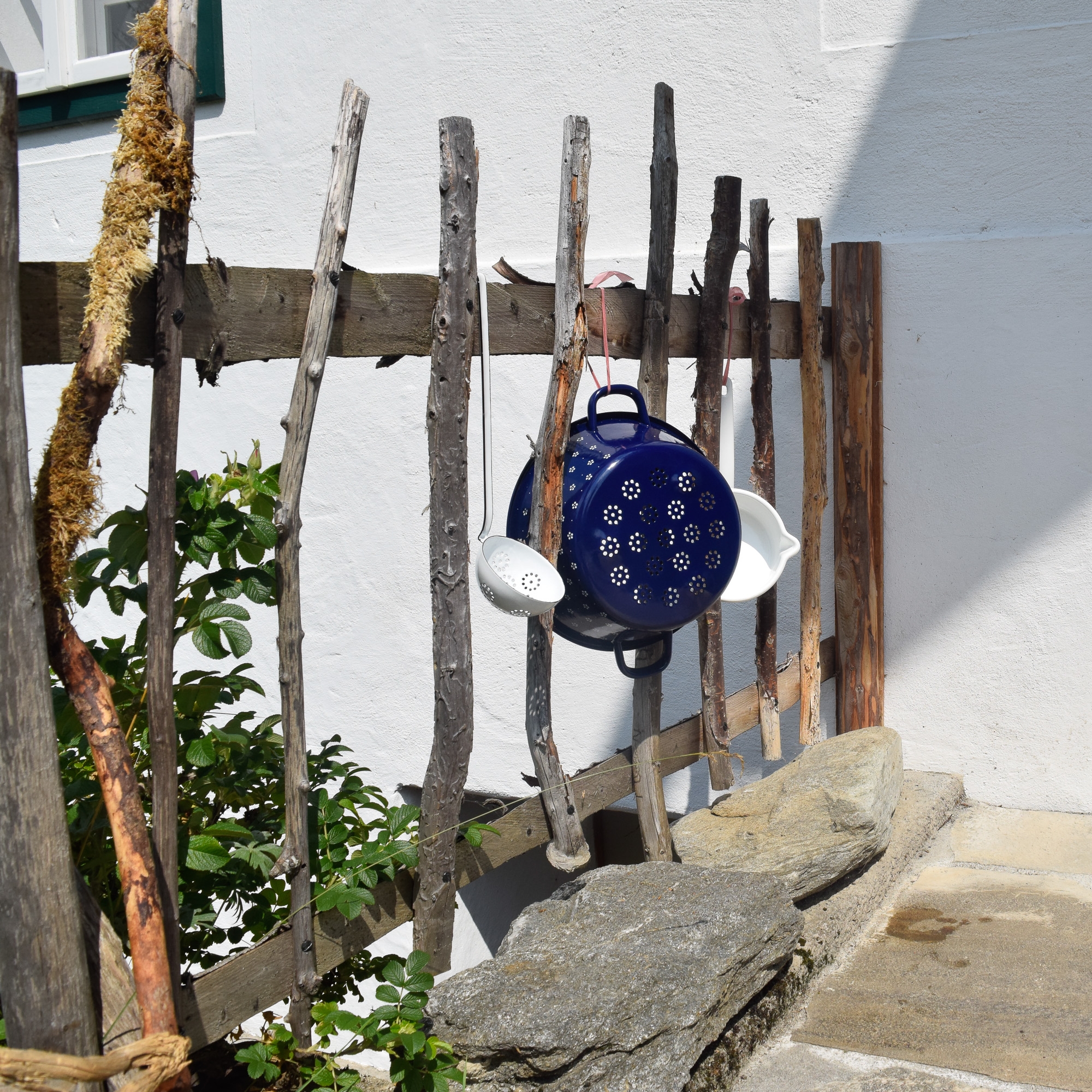
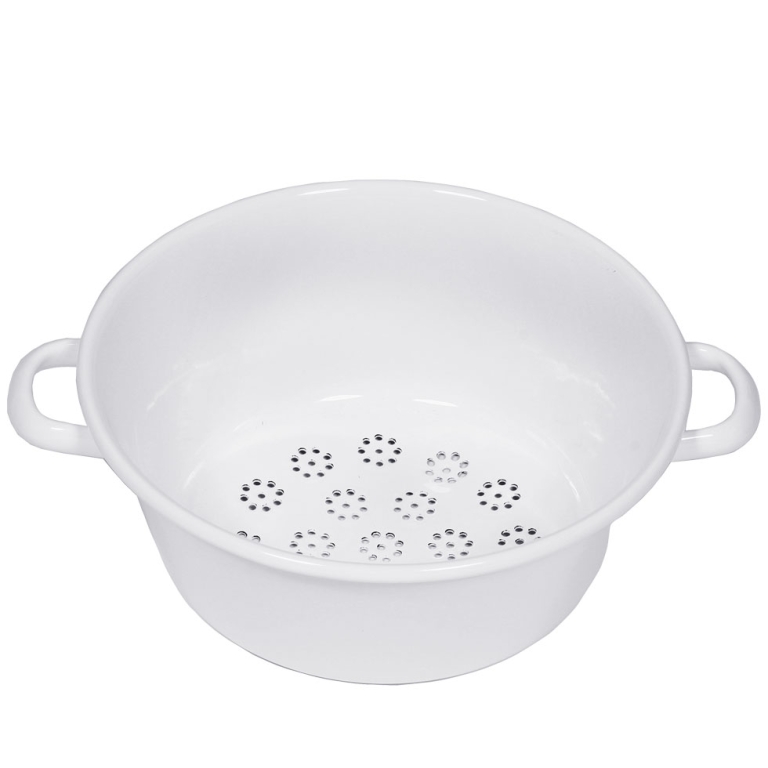
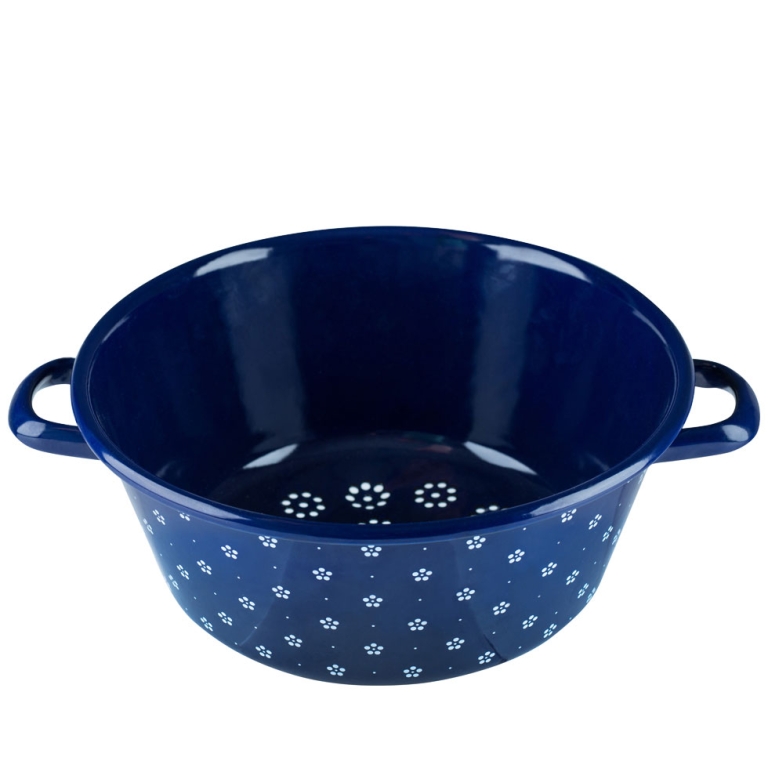
The large kitchen sieve from Riess, also known as a vegetable strainer, is versatile for straining or washing fruits, salads, and vegetables. With its two side handles and three support points on the bottom, it can be safely placed on the kitchen counter or in the sink. The bottom is made with flower-shaped holes to allow optimal drainage. For smaller quantities, RIESS also offers a smaller strainer in three different sizes.
Before first use: Remove the sticker, fill with boiling water and vinegar, and let it sit for a short time.
Enamel is easy to clean thanks to its smooth, non-porous glass surface – and it inhibits bacterial growth.
- After cooking and emptying, fill the still-warm cookware with warm – never cold – water and dish soap. After a short soaking period, the cookware can be cleaned effortlessly.
- For particularly stubborn or burnt-on residues, briefly boil water with dish soap.
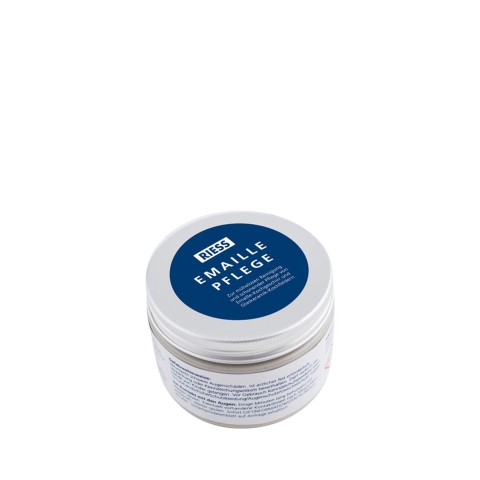
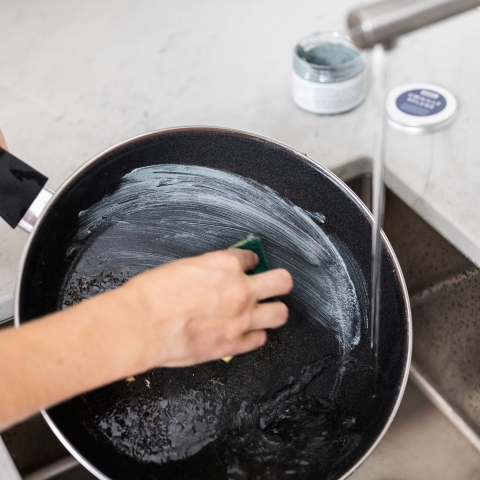
- For cleaning, use RIESS enamel care or a mild scouring milk, along with the smooth side of a sponge or a soft brush.
- Avoid using wire brushes, steel wool, abrasive powders containing sand, or sponges with ceramic particles.
- Store the cookware well dried. Any lime stains can be easily removed with vinegar water.
- If flash rust appears on exposed enamel edges or the rim, it can be easily removed with dish soap.
- Exposed enamel edges can be re-oiled from time to time with cooking oil.
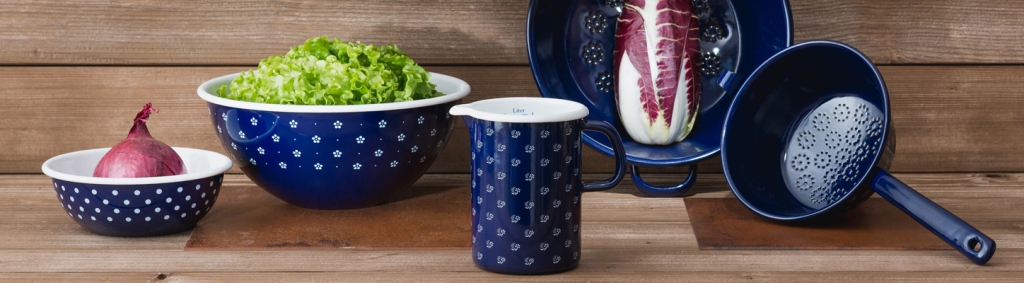
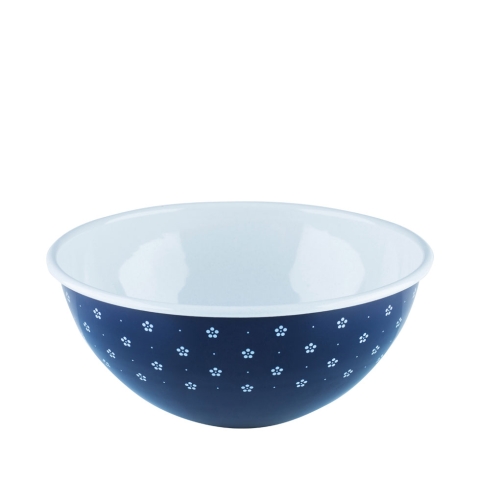
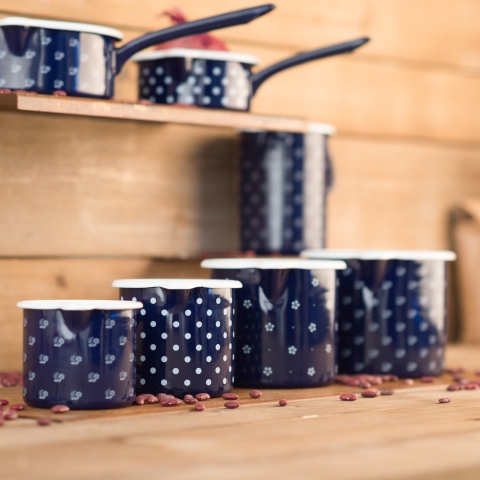
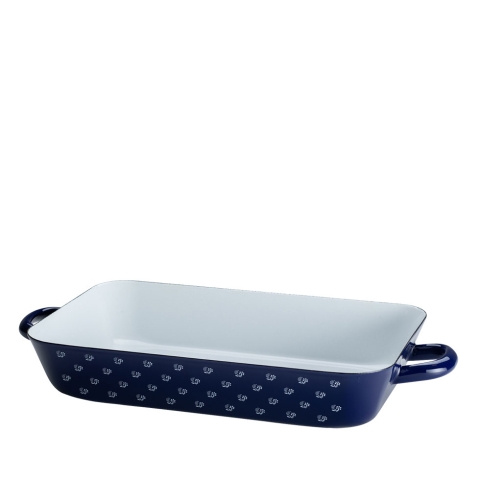
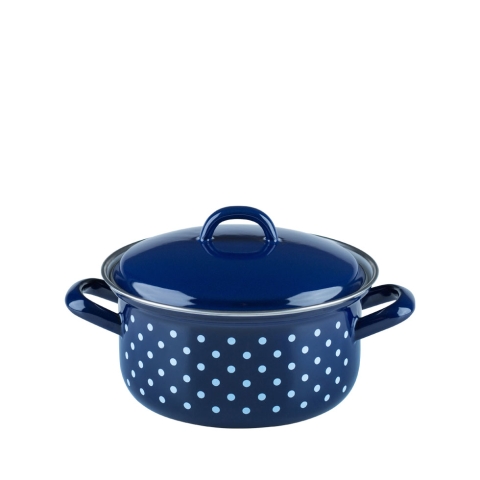
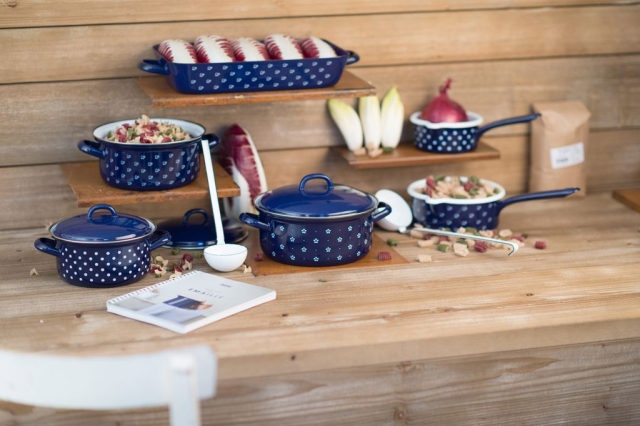
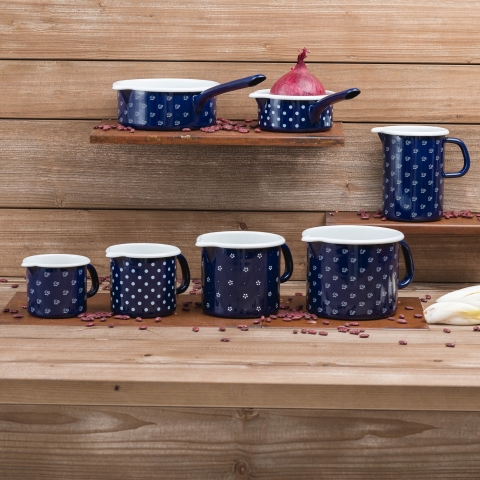
The collection is inspired by the tradition of blueprints found in Austrian 'Dirndl' dresses, featuring three different blue and white patterns.