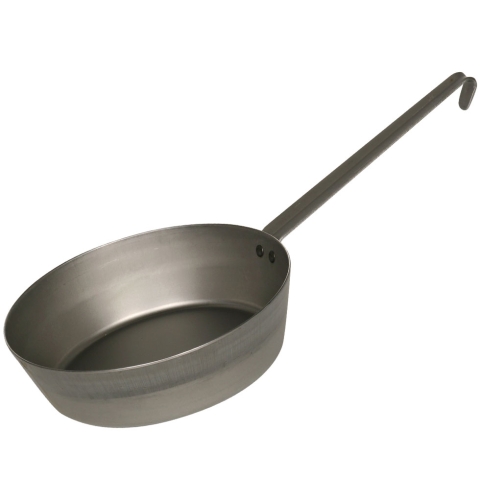
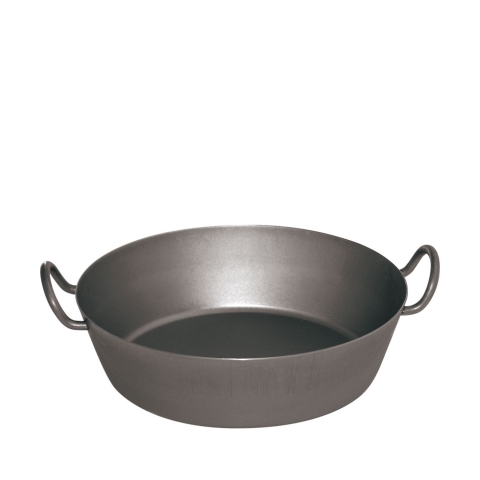
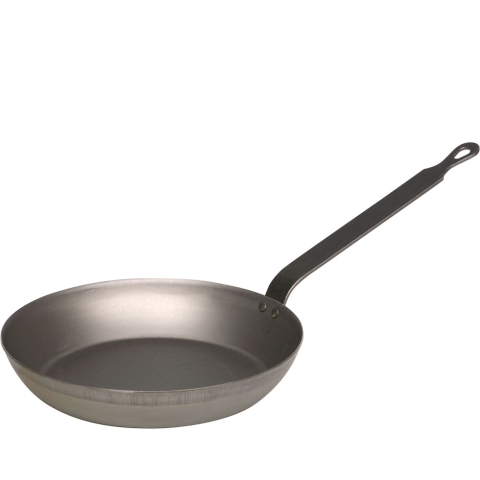
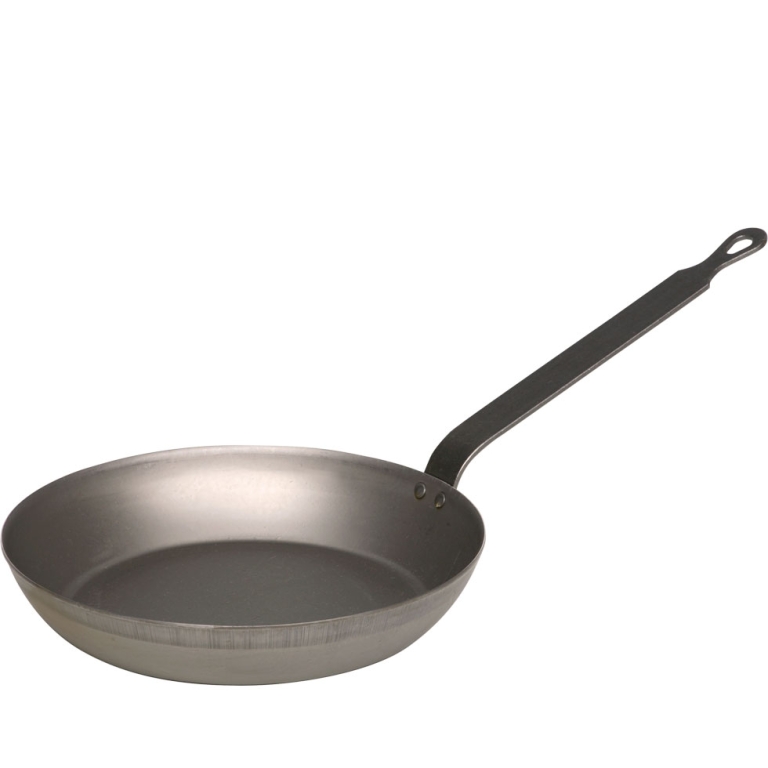
Iron pan Ø 30cm
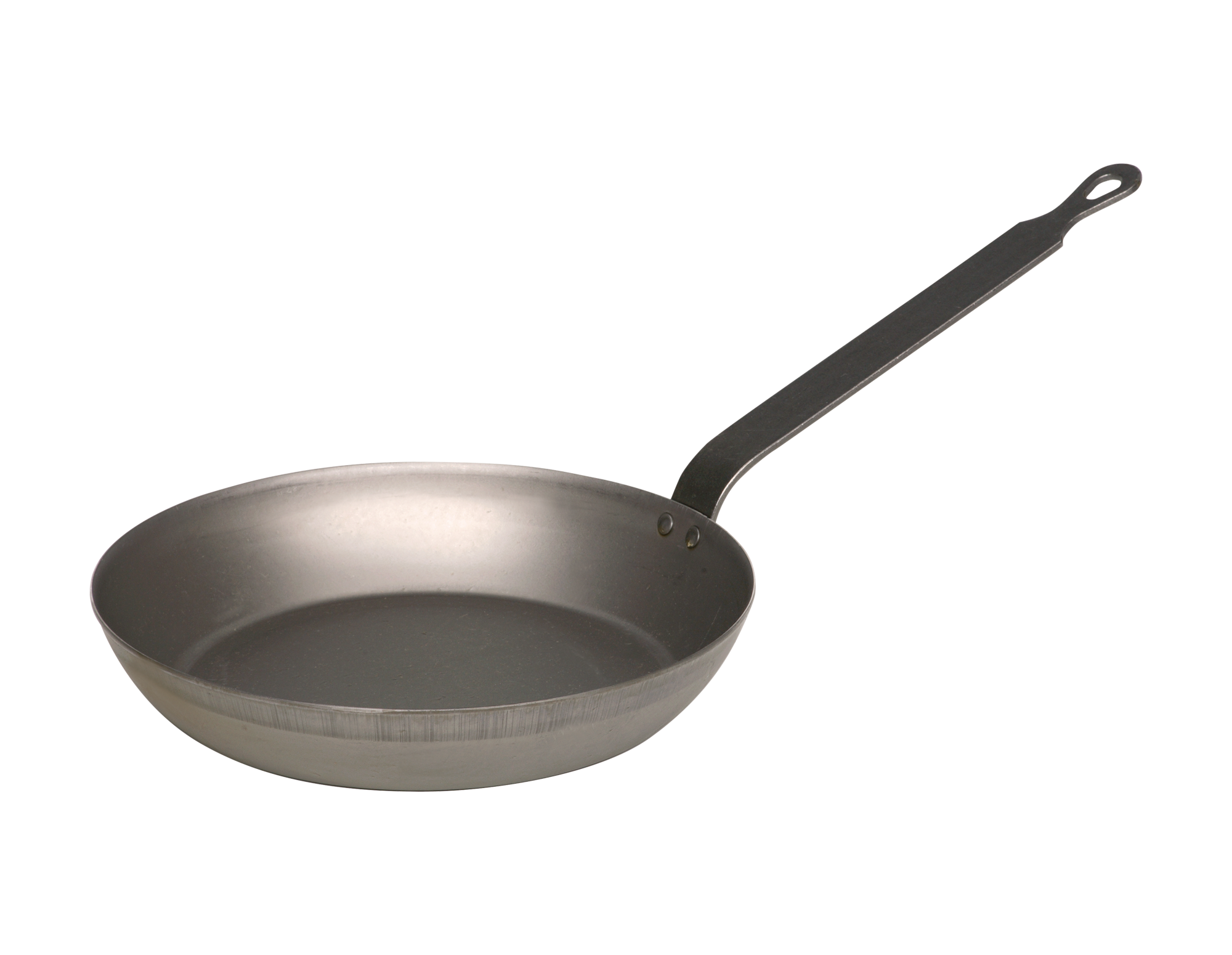
- Contact surface diameter: 21.7cm
- Inner diameter: 29.6cm
- Depth: 5.5cm
- Volume: 2l
- Article number: 0561-023
- EAN: 9003064230032
- In stock - More than 10 pieces available
- Delivery within 6 daysexcluding weekends and public holidays in Austria View shipping costs
 Campfire
 Gas
Gas Glass ceramic
 Grill
Grill Induction
 Oven
Oven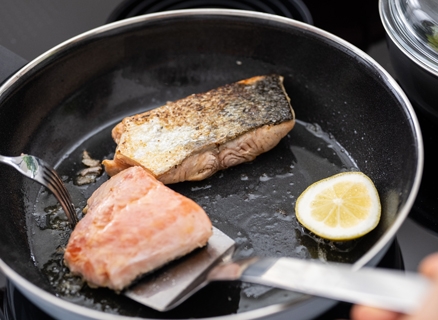
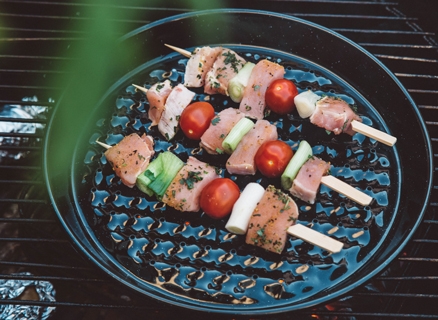
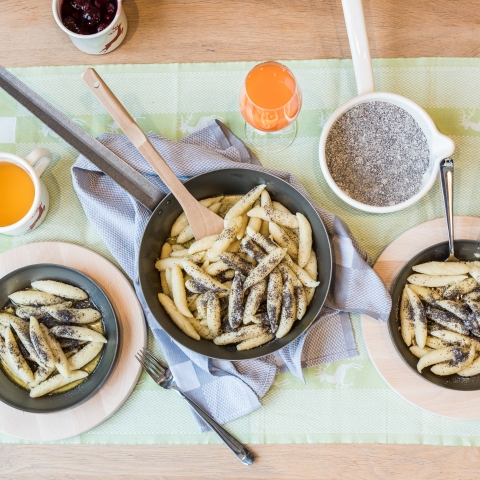
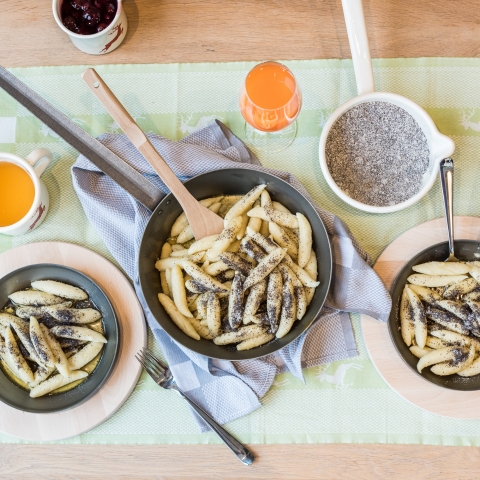
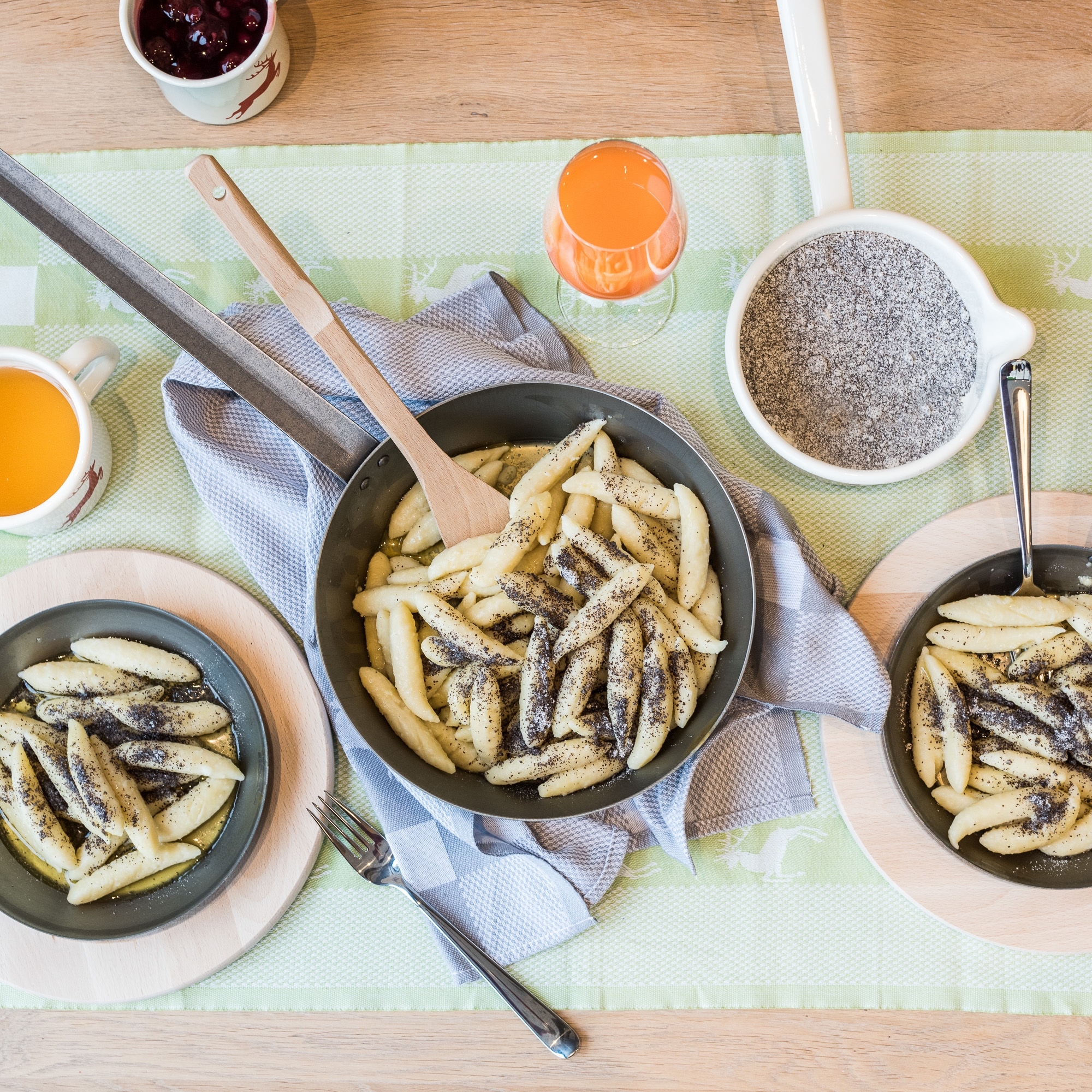
Our iron pans are cold-formed by pressing a stamped steel sheet under high pressure into a deep-drawing mold. The pan handle is attached and always comes with a hanging device so that the pan can be stored hanging as was traditionally done. Iron pans are popular among chefs not only for their rustic appearance but especially for their excellent frying properties. Thanks to the rapid heat conduction of iron, they are ideal for sharp frying, making fried potatoes and meat particularly crispy. Iron pans are often also used as serving pans, frequently in combination with the 'pan holder' or a round board serving as a pot coaster. Over time, the function of the pan improves with the formation of a patina that forms through the porous structure of the pan and serves as corrosion protection. With proper care to avoid rust formation, RIESS iron pans are faithful companions for many culinary adventures. In addition to classic applications for fried potatoes, meat, or noodle dishes, the iron pan can be used for all dishes that require a pan. Before first use, the protective wax layer should be removed with hot water, and the pan needs to be seasoned. After use, do not place the pan in the dishwasher; simply wipe with a kitchen cloth. For heavy crusting, clean with water, salt, and a brush, and then dry well on the warm stovetop.
Before first use: Remove the sticker, fill with boiling water and vinegar, and let it sit for a short time.
Enamel is easy to clean thanks to its smooth, non-porous glass surface – and it inhibits bacterial growth.
- After cooking and emptying, fill the still-warm cookware with warm – never cold – water and dish soap. After a short soaking period, the cookware can be cleaned effortlessly.
- For particularly stubborn or burnt-on residues, briefly boil water with dish soap.
- For cleaning, use RIESS enamel care or a mild scouring milk, along with the smooth side of a sponge or a soft brush.
- Avoid using wire brushes, steel wool, abrasive powders containing sand, or sponges with ceramic particles.
- Store the cookware well dried. Any lime stains can be easily removed with vinegar water.
- If flash rust appears on exposed enamel edges or the rim, it can be easily removed with dish soap.
- Exposed enamel edges can be re-oiled from time to time with cooking oil.
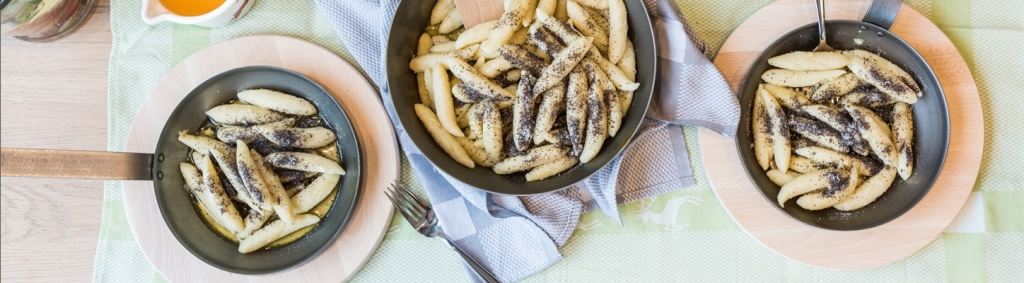
Since 1550, we have been crafting durable iron pans. Before use, the wax layer is removed, and the pan is seasoned – creating a natural patina that requires less fat.